

15 May 2026 · 3 min read
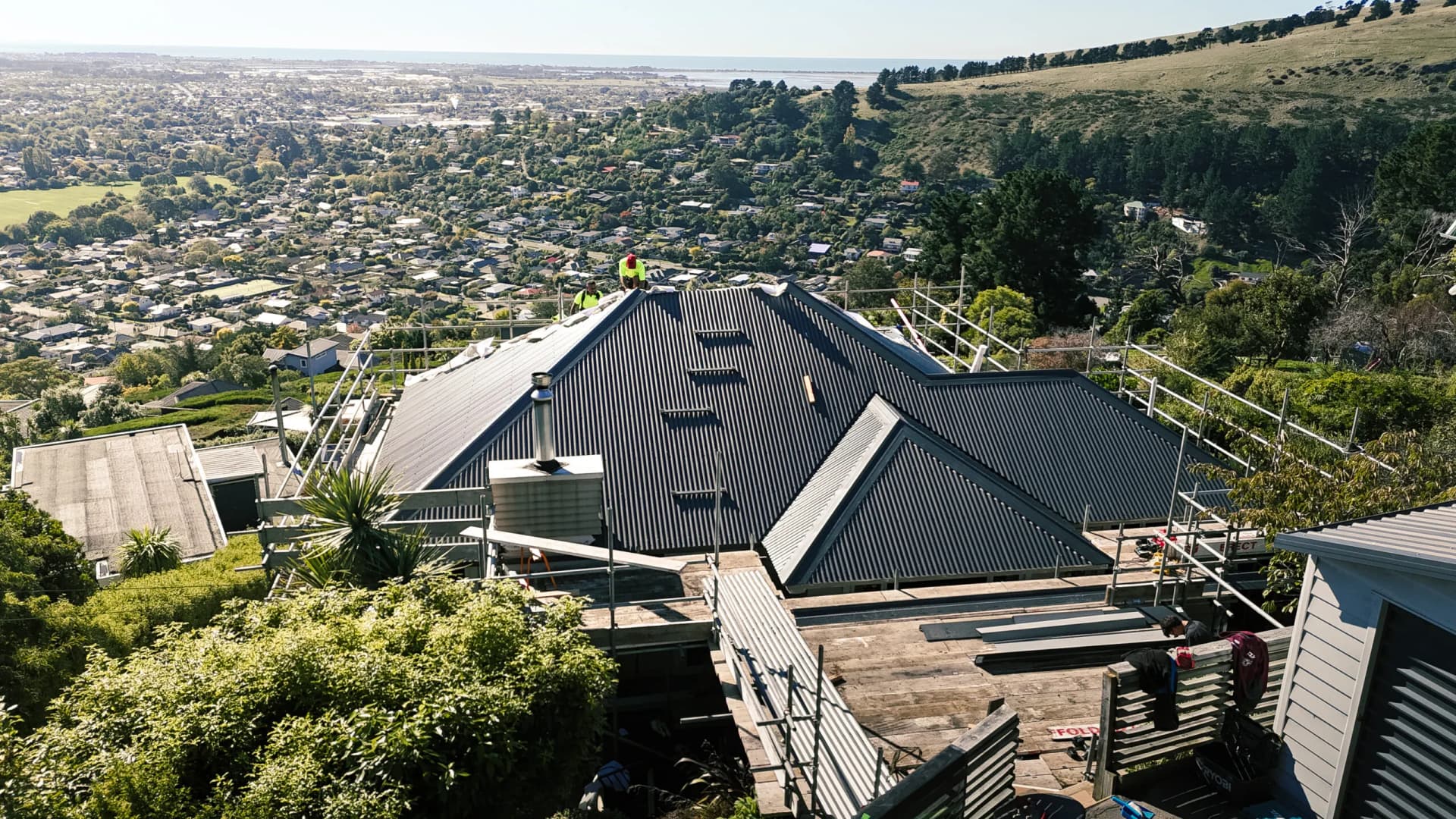
If you're planning to refresh your home, you're likely wondering, "How long does it take to re-roof a house?" The answer varies more than you might expect, but for the majority of Christchurch homes, you're looking at 3 to 7 working days from the project's start to site clean-up.
That said, no two residential roofing projects are the same. Here's what actually drives the timeline, and what you can do to keep your project moving.
What's the average re-roofing timeframe?
For a standard single-storey Christchurch home, how long re-roofing takes typically falls between 3 and 5 working days. A straightforward metal re-roof on a single-storey home with easy access and no structural surprises sits at the shorter end. Larger or more complex jobs, such as those with steep pitches, multiple roof planes, or framing repairs, push the timeline out.
This is longer than what some offshore guides suggest — our process for re-roofing in Christchurch follows specific Building Code requirements, and our experienced teams don't cut corners to hit an artificially fast turnaround.
Roof size and complexity
The larger the roof, the longer the job. A modest single-storey home with a simple gable profile is faster to strip and re-clad than a two-storey home with hips, valleys, dormers, or multiple roof planes. Each additional angle means more precise cutting, more flashing work, and more time.
Roof size and complexity are always the biggest variables in how long it takes to re-roof, more than materials or crew size alone.
Material choice
Metal roofing in long-run profiles is much faster to install than concrete tiles, which require individual placement and are heavier to handle. If you're switching material types, say from tiles to steel, your roofer may need additional time to assess and prepare the substrate.
How long does re-roofing take with metal? It's often at the lower end of the range, which is one reason it remains the most popular choice for Canterbury homes.
Canterbury's weather
Nor'westers, winter southerlies, and sudden rain events all have a say in your re-roofing project timeline. Work can be paused during heavy rain or high winds for safety reasons, as wet conditions compromise the quality of certain installation steps, particularly around flashing and sealing.
We consider Canterbury's seasonal patterns when scheduling jobs. Late spring through autumn tends to offer the most reliable working conditions, though we work year-round and manage weather delays efficiently.
Roof access and site conditions
A home with clear access (open sections, flat ground, and no large overhanging trees) allows scaffolding to go up quickly and materials to be moved efficiently. Tight urban sections, sloped sites, or homes with limited driveway access can add logistical complexity, extending the timeline by a day or two.
Structural repairs discovered during strip-out
This is the factor most homeowners don't anticipate. Once the old cladding comes off, the condition of the underlying framing becomes visible. If there's rotted timber, weakened rafters, or prolonged moisture damage, those repairs need to be done before the new cladding goes on.
It's not a worst-case scenario — it's actually the benefit of a full re-roof. You get the structure right, then you put a new roof over it.
How the process works
A typical Christchurch re-roof runs: consult and quote, schedule, scaffold and protection, strip, substrate check, new underlay and cladding, flashings and spouting, then a full site clean-up. Our specialists will give you a written timeline at consultation so you know what to expect on your property.
Ready to plan a re-roof? Get a free quote from Christchurch Roofing & Cladding.